
Why a Typewriter, Still
And what Van Neistat's got to do with it
Why a Typewriter, Still
Hey Creative Souls,
It’s been a while since I posted. Life, health and few other circumstances got in the way. But I’m back.
I’ve revamped the entire YouTube channel; whittled away some off-topic videos, tidied up the look and feel, updated some thumbnails and most importantly, started a new series of Shorts called the Type Writer Notes.
The Type Writer
There’s an Olivetti Lettera 35 in the corner of my office.
I paid about £40 for it after watching Van Neistat’s channel, which is the honest origin story and probably also the least interesting thing about it. Not that there is anything not-interesting about Van’s channel — it’s ace.
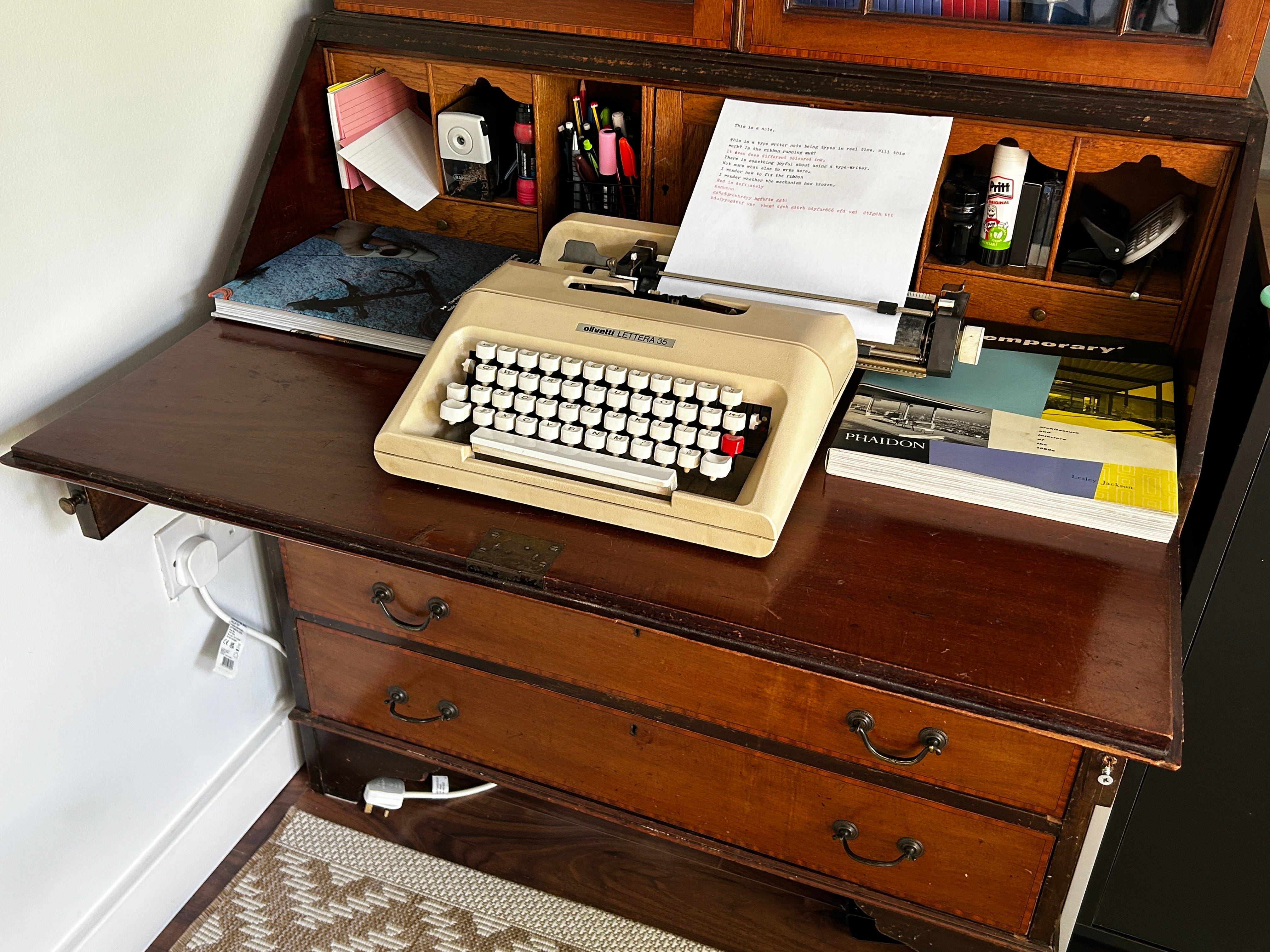
The ribbon is temperamental. The hammers stick if I type too fast. I’ve had to wedge the machine in place with a roll of sellotape behind it and two books either side to stop it sliding around when I’m using it. None of which is a problem. It’s the endearing nature of using this device.
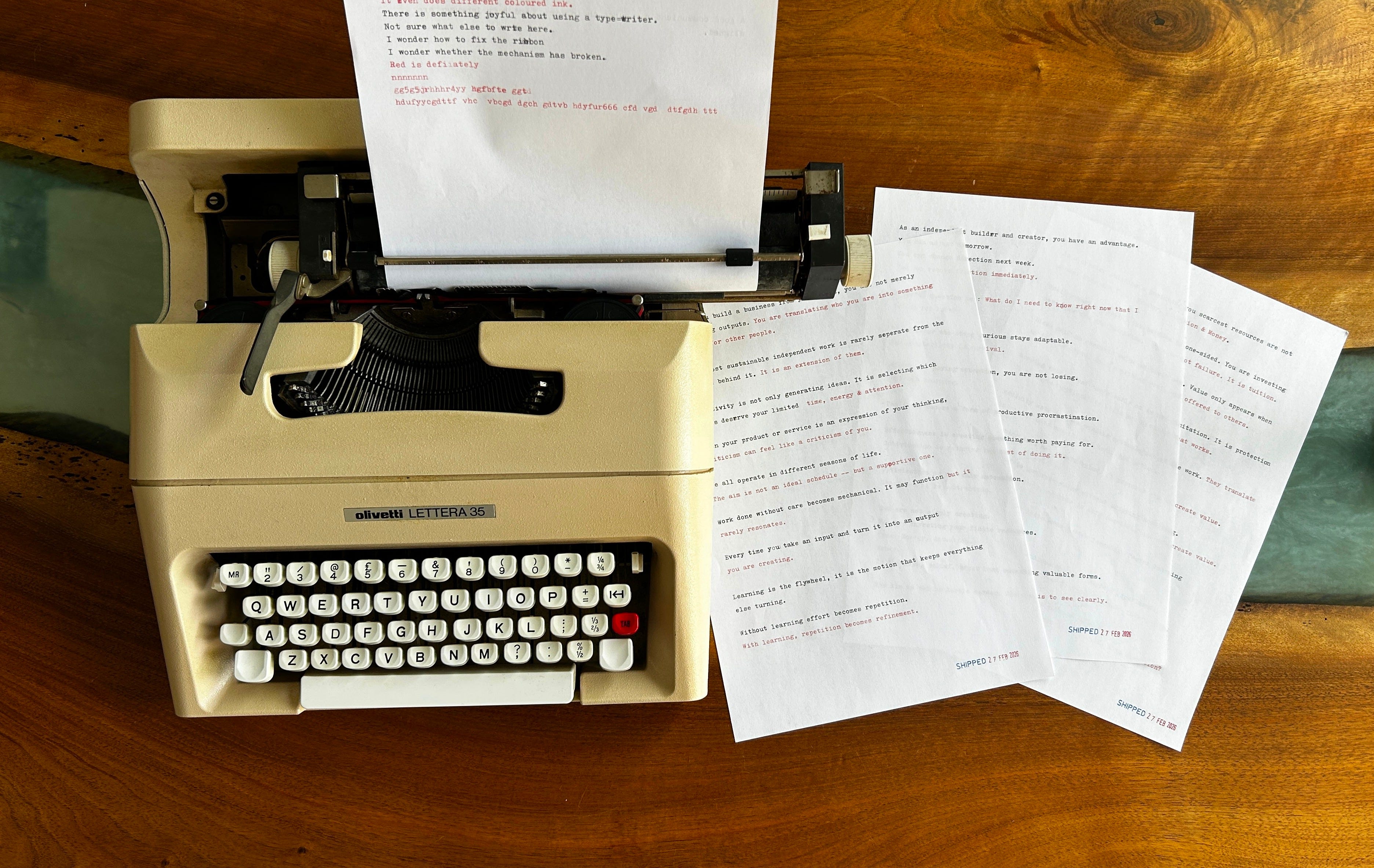
What comes out of it I’ve been calling typewriter notes — single sentences, typed slowly, filmed in real time, posted as shorts on the CSP YouTube channel.
No music, no cuts, no voiceover — no gloss. Just the sound of the hammers hitting the page and a sentence appearing one letter at a time. Season 1 drew thirty quotes from the Solo Creator guide. Season 2, arriving in June or July, comes from the Communication Superpower workbook. Season 3 is still undecided. These guides and books are part of my deep work over at Cultivated.
Friction
There is a lot of friction involved in using a typewriter.
You can’t backspace to delete on a typewriter. You can use Tipex, but mostly you live with the spelling mistakes. You commit to the line as you’re typing it — even if said line has gaps, missing letters and errors.
If you go too fast the hammers lock up and you have to stop and reset — and work out where the next hammer will strike the page. You have to reload the paper — and it’s often at an angle.
The machine forces a relationship with the sentence that a keyboard often removes — every word costs something to put down, which means you notice what you’re saying in a different way.
That cost — the friction — though, also has a reward on the other side. Not in a productivity sense, obviously. It would be much faster to type these on the laptop sitting two feet away.
The reward is what the slowness produces — a kind of attention that’s hard to manufacture any other way, a disconnection from the internet, a slowing down, a pondering, a rhythmic beat from the hammers and keys, and an artefact at the end that feels different from a print out of the same words.
Why I do it
This isn’t a video about typewriters, really. Or this isn’t a newsletter about typewriters.
It’s about something I think is true about creative work more broadly: the tools we choose to use shape both what we produce and, more subtly, who we become while producing it.
There’s a time and a place for the most efficient medium. There’s also a time and a place for the medium that pushes back. A medium that creates more friction but also a much greater reward on the other side.
The typewriter pushes back.
That’s why it stays in the corner.
That’s why I use it often.
That’s why I make these typewriter shorts.
If you want to see the shorts as they appear, they live on the CSP YouTube channel.
The full video about why I’m doing this — including a tour of the sellotape engineering and a closer look at the artefacts — is there now too.
Until next time,
Rob..
Winchester. May 2026.
I had never thought about the concept of friction in writing. It makes sense that since you can't correct your mistakes with a typewriter as easily as you would with a keyboard, the consequence is you pay more attention to the words you choose. Really interesting idea!